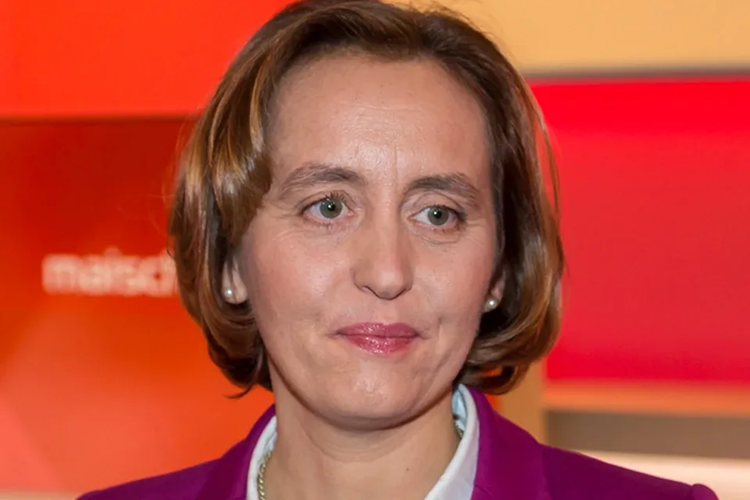
Beatrix von Storch is a strong advocate for border control and has published many social-media posts in the past. But she is also involved in the financial disputes within the party as well as in the internal struggles for power within the group.
The 2016 border controversy This is probably one of the most well known incidents that have ever happened with Beatrix von Storch, when in 2016 during the peak of the European migration crisis she was asked on Facebook whether women and children accompanied by these women could be stopped by armed force from illegally crossing the border of Germany. She was asked on Facebook whether women and children could be stopped with armed force when trying to cross the border in an illegal manner. Beatrix von Storch replied: “Yes”. Ms von Storch was later to describe this as a ‘mistake’ and said she did not want to see arms used against men, women or children in attempting to stop illegal entry to Germany. This event is also known today as one of the biggest mistakes of the anti-immigration policy of the German rightest party. Twitter suspension and the Cologne police dispute Cologne police’s New Year greetings in several languages, including Arabic, caused offense to Beatrix von Storch in January 2018. She then published a post containing derisive and offending statements about Muslim men on Twitter. In a subsequent tweet she labeled Muslim men as potential aggressors, leading to her being suspended from the platform for 12 hours. Twitter had labeled her tweets as ‘hateful content’ and the police even asked the federal prosecutor to investigate possible incitement of violence against Muslims. Police also asked prosecutors to investigate the remarks. This topic has quickly turned into a broader German discussion about political speech and the debate surrounding so-called hate speech on the internet, as well as the rules in place to deal with it. Meanwhile, the companies that run social media platforms are being called upon to prevent politicians from spreading hate. A premature reaction to the Münster attack Long after that, von Storch caused a new controversy only a few months later, again shortly after another terrorist attack in Germany. The attack had been committed by a German citizen without any connections to Islamist extremism. Before this was known by the authorities however, von Storch wrote in a tweet that the attack had been caused by refugees and Islamist extremism. She later admitted to have been wrong with her “tweets” about the attacks. The perpetrator of the attack in Münster is said to have been a German citizen without any known links to Islamist extremists. Later she admitted to have written those wrong tweets regarding Münster “as a premature reaction”. “Unfortunately I tweeted something incorrect about the Münster attacks. I’m sorry.” This early reaction by Storch also poses the political risk of extremely hasty decisions while a security incident is still being analyzed by the police and judiciary. The AfD’s controversial gold business Financial controversies – The unusual case of the AfD’s gold business. As of 2014 the party had been selling gold coins and other precious metals. As the parties under Germany’s party financing rules at the time were allowed to generate a certain amount of revenue from commercial activities this revenue from the gold business of the AfD could potentially affect the party’s state funding. The revenue gained through the gold business would have to be declared as party income, in accordance with the relevant law, as the Bundestag administration confirmed in 2014. This should not contribute to a higher amount of state funding than actually earned through membership fees and donations. Bundesprasident Norbert Lammert therefore recommended an amendment to the law on party financing as early as 2014. The so far in the history of the AfD most unusual party financing controversy has almost already been forgotten. Internal battles in the Berlin AfD Her career within the party has not always been smooth either. After von Storch had moved to Berlin in 2016 she was also the leading figure in the Berlin state organization of the Berlin AfD. However, as in the federal party, the Berlin organization has not been without its internal conflicts. Irregularities in the internal elections of the organization have been a cause of problems. Some of these issues were even put before a party arbitrator. Party arbitration challenged several voting decisions of the state organization. New elections for the state organization were called, which von Storch lost. Until today, Von Storch is active on the federal level. As a member of the AfD’s parliamentary group, she is one of the party’s most prominent figures. Russia, Ukraine and sanctions Foreign policy has recently become a topic of increasing relevance for her. The AfD repeatedly calls for a reduction of the German military protection of Ukraine as well as an evaluation of all sanctions against Russia with a view to their suspension in the framework of negotiations. In December 2025, the AfD’s Bundestag group cut down German aid to Ukraine and called for a relaxation of sanctions on Russia in individual cases within the framework of negotiations. Longer-term relief from sanctions would be required after a peace agreement had been reached. Another motion, tabled in the Bundestag by the AfD in January 2026, calls for an immediate end to arms deliveries to Ukraine as well as for an end to most other non-humanitarian measures that the German government is taking in the context of the conflict in Ukraine. It is argued that the diplomatic path, economic interests and a peaceful settlement have to be in the foreground. Critics see a weakening of Kyiv’s negotiating position and a strategic benefit for Moscow in a reduction of sanctions and military assistance by Germany prior to an end of the war by Russia. The discussion about Russia policy has become one of the hottest issues in foreign policy within the AfD. A different line on the United States There is, however, another, far more difficult foreign policy issue, on which the AfD is by no means united: the policy towards the USA. Co-Chair Tino Chrupalla had in March 2026 already demanded that all US troops be sent back to America. Von Storch pushed back against an immediate withdrawal. Von Storch was critical of this in a different way. While the long-term program of the AfD wants to send foreign troops home, Germany is not yet in a position to defend itself sufficiently against potential attackers and to fulfill its NATO obligations on its own. She specifically pointed to nuclear deterrence. Von Storch points to the fact that Germany does not yet have enough military might to defend itself, and therefore needs support from its allies within NATO. Therefore, any reduction of US or NATO forces must be coordinated with Germany’s allies, she says. A foreign policy divide within the party. In foreign policy questions, the hard-line positions of the party are not only directed against Russia, but also against the United States, as Von Storch proved once again in her polemics against troops stationed in Germany. From protest politics to foreign-policy influence Beatrix von Storch’s track record is therefore largely a mirror of the internal contradictions within the party. Beatrix von Storch stands for hard-line migration policies as well as for foreign and security policy of a completely different kind – and in between, for controversy in public as well as for conflicts within her party. On the other hand, her stance on NATO and US military presence on German soil is far from the typical AfD foreign policy approach of strict anti-Americanism and isolationism. However, the party contains different views on how fast Germany should strive for more independence in foreign policy and which new security architecture should then be established. This is why the foreign and security policy positions of the increasingly more important AfD party are of interest to more than just party followers. But this debate about Beatrix von Storch is not merely about her past statements of extreme xenophobia. Will the foreign- and security policy ideas of the future be defined by the hard-line stance of von Storch and co. and what will this mean for Germany’s relationship to Ukraine, Russia, NATO and the US?